
Drone Spraying vs. Airplane Application: Which Is Best for Your Crops?
Every growing season presents new challenges. From changing weather conditions to disease pressure and tight application windows, farmers need crop protection solutions that are both effective and timely. One question we hear more often is, "Should I use a drone or an airplane for my crop application?"
The answer depends on your operation, your acreage, and your goals. Both methods have their place in modern agriculture, but understanding the differences can help you make the best decision for your farm.
What Is Drone Spraying?
Agricultural drones are unmanned aircraft designed to apply crop protection products over smaller areas. They use GPS technology to fly pre-programmed routes and can be useful in fields where precision applications are needed or where access is limited.
Drones have become increasingly popular for certain specialty crops and smaller fields because they can target specific problem areas with a high level of accuracy.
What Is Airplane Application?
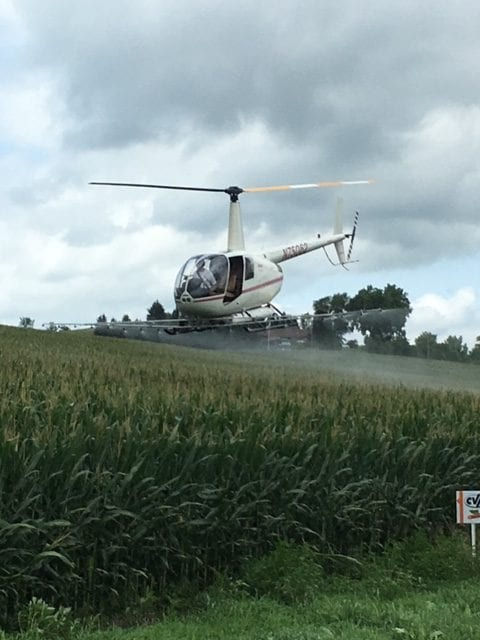
Aerial application using an airplane allows experienced pilots to efficiently apply fungicides, insecticides, herbicides, and other crop protection products across large acreages. Airplanes are built to cover more ground in less time, helping farmers stay ahead of disease outbreaks and narrow weather windows.
At NEIA Aviation, our experienced pilots use modern aircraft and precision application technology to provide safe, accurate, and efficient applications throughout Nebraska, Iowa, and South Dakota.
Comparing the Two
Coverage
One of the biggest differences is how much ground each can cover.
While drones work well for smaller applications, airplanes can treat hundreds of acres in a fraction of the time. During critical growing periods, speed often makes a significant difference in protecting crop yield.
Field Conditions
When fields are too wet for ground equipment, aerial application provides an advantage by allowing products to be applied without causing soil compaction or crop damage.
Both drones and airplanes eliminate wheel tracks, but airplanes can continue covering large acreages quickly when every hour counts.
Efficiency
For larger farming operations, airplanes offer greater efficiency. They spend more time applying products and less time returning for refills, making them an excellent option for large-scale agriculture.
Precision
Today's aerial application is far more advanced than many people realize. Modern aircraft use GPS guidance systems and advanced application technology to ensure accurate coverage while minimizing overlap.
The goal is always the same: placing the right product in the right place at the right time.
Which Option Is Right for Your Farm?
Every operation is different.
Drone applications may be appropriate for:
Smaller fields
Specialty crops
Targeted treatment areas
Airplane applications are often the better choice for:
Large acre operations
Time-sensitive fungicide applications
Insect control
Covering multiple fields quickly
Situations where weather creates a narrow application window
Why Timing Matters
One of the greatest benefits of aerial application isn't just speed—it's timing.
Disease pressure can develop quickly, and delaying an application by even a day or two may impact crop health and yield potential. Being able to respond promptly when conditions are right helps farmers protect their investment throughout the growing season.
Partner with NEIA Aviation
At NEIA Aviation, we understand that every acre matters. Our team works closely with growers to deliver timely, accurate aerial applications that help protect crops while maximizing efficiency.
Whether you're planning a fungicide application, insecticide treatment, or another aerial service, we're committed to providing dependable service backed by experience and precision.
If you're unsure which application method is right for your operation, our team is happy to discuss your fields, your goals, and the best solution for your farm.
Comments